

May 2026 Public Humanities
A monthly newsletter connecting publicly-engaged humanities scholars and practitioners across the US (and beyond), hosted by the Department of Public & Applied Humanities at The University of Arizona.
In this issue:
Calls for papers / proposals
Upcoming events
Publications
May spotlight: Q&A with Dr. Judith Raiskin
Employment & Fellowships opportunities
If you haven’t already, please consider subscribing to Substack, a free app, to receive the newsletter in your email inbox and not miss any future news! We also encourage you to submit items to share. If you have any questions or would like to connect about the newsletter, please email Giulia Negretto at giulianegretto@arizona.edu.
Calls for Papers / Proposals
“Teaching the Publicly-Engaged Humanities to Undergraduates”
Humanities X & U of A Department of Public and Applied Humanities
HumanitiesX, DePaul University's Experiential Humanities Collaborative, and the Department of Public and Applied Humanities at the University of Arizona, seek proposals from faculty and community practitioners to present at their annual summer professional development workshop series, to happen online this July. Those selected to present receive a $400 stipend.
Deadline: May 21, 2026
Complete interest form
“Being Human in a World on Fire”
Community College Humanities Association (CCHA)
The CCHA is now soliciting papers for its 2026 conference “Being Human in a World on Fire.” The conference will be held at the Owings Mills Campus of the Community College of Baltimore County (MD), October 1st-October 3rd. They welcome proposals for workshops, panels and presentations for interdisciplinary tracks that explore: The Politics of the Humanities; The Economics of the Humanities; Culture, Education, Technology; and Traditional Humanities Scholarship.
Deadline: June 30, 2026
Learn more
“Futures, Fractures, and Fixes”
Society for Applied Anthropology (SfAA)
The SfAA invites abstracts (sessions, papers, posters, and videos) for the Program of the 87th Annual Meeting in Norfolk, VA, March 23-27, 2027. They welcome abstract submissions from scholars, practicing social scientists, and students from a variety of disciplines — anthropology, sociology, economics, business, planning, medicine, nursing, law, and other related social/behavioral sciences — and organizations to discuss their work and brainstorm for the future.
Deadline: October 1, 2026
Learn more
Public Humanities Journal
Public Humanities, the international open-access, peer-reviewed journal, has several open calls for papers for a variety of themed issues. The two latest calls for proposals include The Politics of Cute and African American Roots and Routes.
Deadline: December 1, 2026
Upcoming Events
“Building Applied and Interdisciplinary Undergraduate Programs”
National Humanities Alliance (NHA)
July 27-August 6
Virtual
Discover research-based approaches for creating meaningful interdisciplinary pathways that connect the humanities with other fields. This interactive professional development course helps faculty and administrators identify campus partners, align ideas with institutional priorities, and develop sustainable, applied programs. Participants collaborate with peers and leave with concrete strategies ready for implementation.
Registration deadline: July 24, 2026
Register
“Filipino Settler Migration, American Imperial Power, and the Making of the Philippines in the Twentieth Century”
National Humanities Alliance (NHA)
May 14th, 4:00PM ET
Virtual
In this webinar, Dr. Karen Miller examines settler migration programs in the Philippines developed under U.S. colonial rule in the early twentieth century. The talk explores how state‑sponsored and privately funded migrations into Muslim and Indigenous territories reshaped land use, governance, and social relations. Drawing on scholarship on American empire, the webinar highlights how these migrations dispossessed local communities and produced enduring logics of settler entitlement that supported extractive political economies and long-term structural inequalities.
Register
“Making the Renaissance Public: Apps, Digital Reconstruction and Issues of Interpretation”
Venice Centre for Digital and Public Humanities (VeDPH)
May 13, 2026, 5:00-6:30PM CET/CEST
Webinar
This webinar, part of VeDPH’s online seminar series, features Fabrizio Nevola (University of Exeter) and explores how apps and digital reconstructions are used to make the Renaissance accessible to public audiences. The session addresses digital interpretation, methodological challenges, and the implications of translating historical research into engaging, public-facing digital formats.
Register
Free Summer Courses
Rare Book School (RBS)
In-person & online
Application for short, non-credit intensive summer courses are now open. Join courses in Charlottesville, at partner institutions in the U.S. or U.K., or from home through online offerings—there’s something for everyone. Given the unforeseen spike in fuel prices and anticipated rising costs for ground and air transportation this year, RBS is making a pool of $25,000 in one-time travel assistance funds available for awards of either $100 or $250, depending on financial need, for students accepted into 2026 summer courses. Requests should be submitted via email to rbsprograms@virginia.edu.
Publications & Project News
“A Framework for Public Humanities: Integrating Public Humanists’ Experiences with Scholarship”
This article offers a timely, field‑defining framework grounded in the lived experiences of public humanists. Based on interviews with 41 practitioners in the US, it clarifies what public humanities work actually requires—social action, translation, sustainability, and institutional change—while directly addressing training gaps, labor precarity, and recognition. This is an essential reading for anyone building, teaching, or sustaining public humanities programs now.
“Now and Here: Public Humanities and National Parks in Tumultuous Times—An Introduction”
This recent publication frames a powerful special issue on public humanities in and beyond the National Park System at a moment of political upheaval. Drawing on the Mellon Humanities Postdoctoral Fellowship Program, it shows how public humanities practice advances inclusive storytelling, community collaboration, and institutional change, even amid funding cuts and censorship. A must‑read for scholars navigating public work under pressure and imagining more just, resilient models for engagement.
May Spotlight: Q&A with Dr. Judith Raiskin
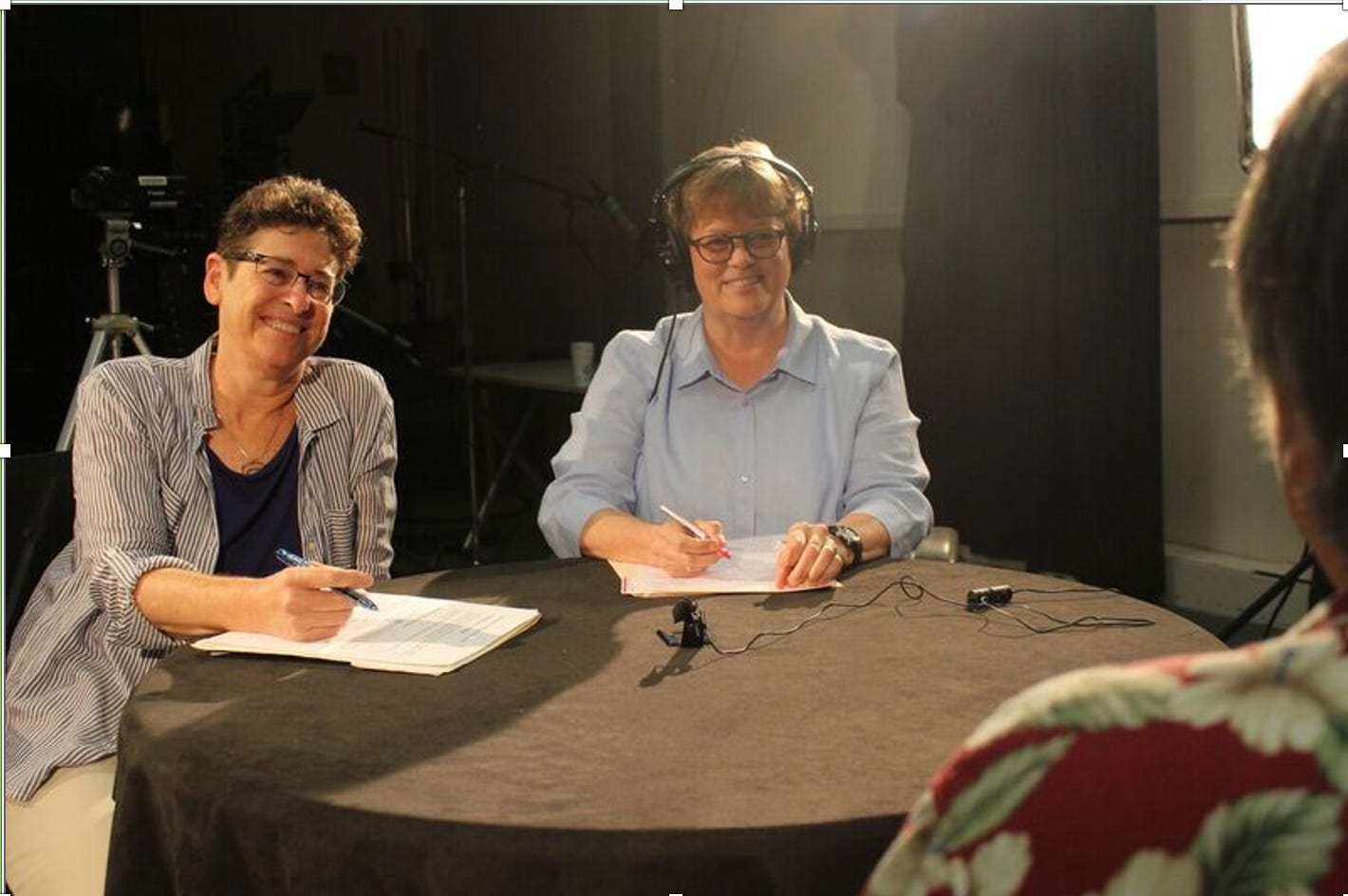
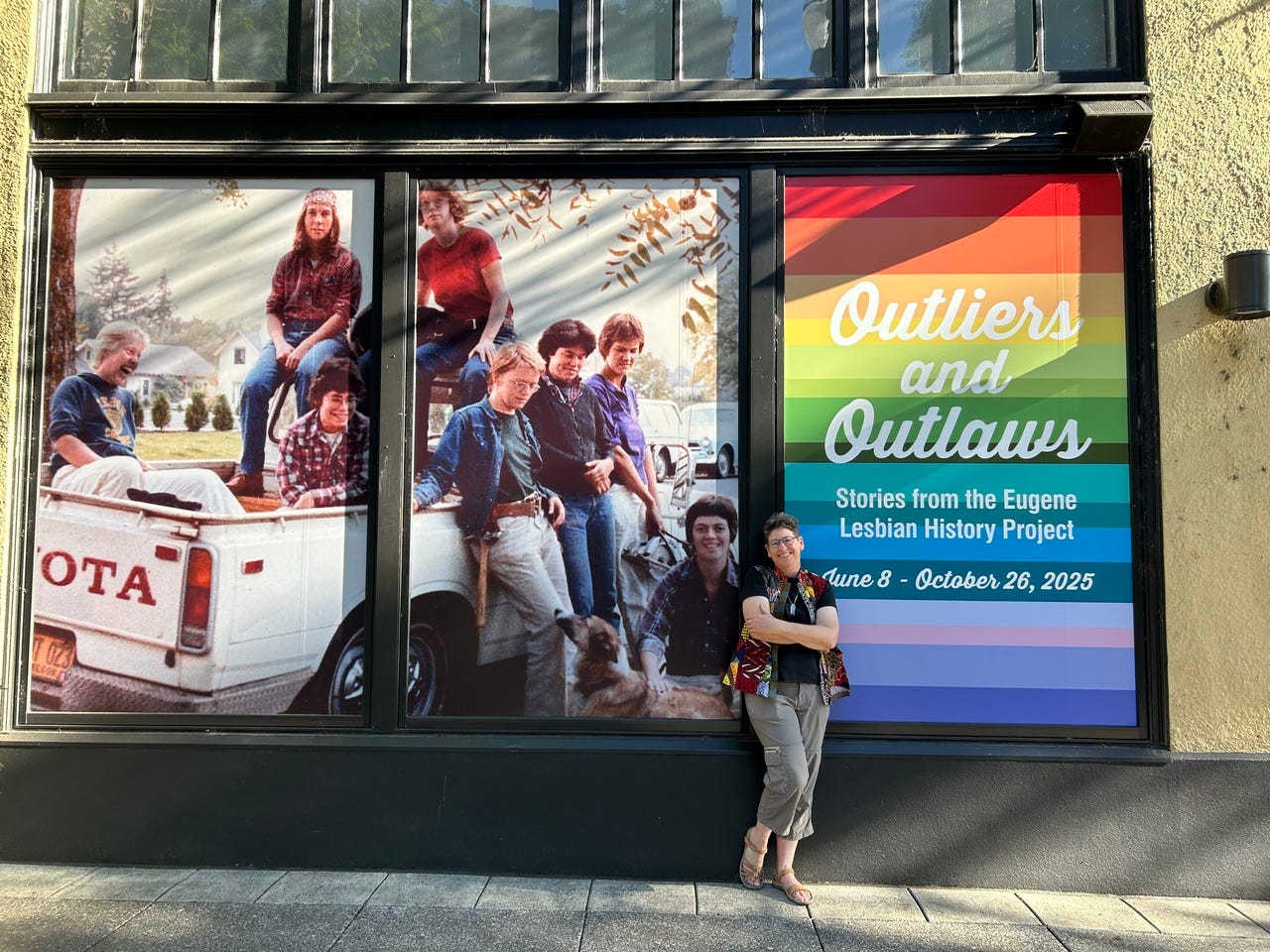
Judith Raiskin is Professor of Women’s, Gender, and Sexuality Studies at the University of Oregon. She is co-director of both the Eugene Lesbian Oral History Project and the Outliers and Outlaws digital exhibit and is Producer of the award-winning documentary film Outliers and Outlaws. This month, we are excited to highlight her perspectives as a public humanities practitioner via a brief Q&A.
How did you become interested and involved in the Public Humanities?
Having recently retired from the University of Oregon, I see my career as a steady move toward the Public Humanities, a field that wasn’t recognized when I began my research and teaching. Over the past decade, I have developed the Outliers and Outlaws “multiverse” that includes an oral history archive, a digital exhibit, museum exhibits, walking tours, a documentary film, and a bookstore! Together, these projects document Eugene’s lesbian community and trace a generational story of queer activism. In the 1960s-90s, Eugene, Oregon was known as a “lesbian mecca,” drawing many hundreds of young women from across the United States who founded cornerstone organizations central to Eugene’s history and influenced Oregon’s political landscape and the national LGBTQ civil rights movement. These women created and worked in collective businesses, ran printing presses, and produced and disseminated lesbian magazines, political treatises, photographs, music, films, theater, dance, and art. With University of Oregon archivist Linda Long, I interviewed 83 of these women who are now in their 70s and 80s. The Eugene Lesbian Oral History Project is fully digitized, transcribed, and fully accessible. All of the Outliers and Outlaws public-facing projects draw from this video archive. The documentary film is now available for university purchase and individual streaming.
What are some of the challenges involved in your work in the Public Humanities?
As an undergraduate in the 1970s, I double majored in English and Public Health, hoping to combine humanistic study with community engagement. Because fields like Health Humanities and Medical Narrative had not yet emerged, I pursued a Ph.D. in English and was fortunate to join an interdisciplinary Women’s, Gender, and Sexuality Studies department. WGSS faculty often navigate a tension—sometimes productive, sometimes not—between writing for academic audiences and engaging in activist projects in local, national, and international spaces. My early academic publications supported my tenure and promotion, but for much of my career my university did not recognize public-facing scholarship or archival work as counting toward advancement to Full Professor. In response, I collaborated with colleagues across campus to revise promotion and tenure guidelines, expanding them to value digital projects, films, exhibitions, and other creative forms, as well as new modes of disseminating research.
Other challenges have included keeping up with constantly evolving technologies and raising funds to support collaborators with specialized expertise in the different modalities. I’ve had to learn many different methods of organization, file sharing, and storage for each project. While it has been exciting to work with filmmakers, editors, web developers, museum curators, librarians, archivists, and grant writers, each collaboration also demanded new technical skills—often pushing me beyond my comfort zone.
What future directions do you envision for your work as a Public Humanist practitioner?
The documentary Outliers and Outlaws has had a wonderful run in film festivals worldwide this year. At many screenings, young people stand up and speak movingly about their desire to connect with queer elders in person. In retirement, I’m excited to focus fully on Public Humanities work that creates space for these connections and for political organizing.
I now host a monthly intergenerational lesbian potluck—open to anyone who is, was, will be, or wants to know a lesbian—which regularly draws 80–100 people across generations. A friend and community activist has opened Outliers Books (follow us on Instagram!) in Eugene. In just its first few weeks, the bookstore is becoming a vibrant “third place” for people to meet and make friends and share ideas. I will be helping to plan programs, readings, and book groups that respond to the needs and imagination of the community. Finally, I’ve begun exploring Health Humanities by screening my film in retirement communities and leading discussions with residents and staff about LGBTQ aging. I have always found that “one thing leads to another,” so I am looking forward to what comes next.
Employment & Fellowships Opportunities
Postdoctoral Scholar, Humanities
Tufts University (Somerville, Massachusetts)
Deadline: review of applications begins May 4, 2026; open until position is filled
Environmental Justice Postdoctoral Fellow
University of Michigan (Ann Arbor, MI)
Deadline: open until position is filled.
Pericles Civic Fellowships
Project Pericles
Deadline: May 11, 2026
Assistant Professor, Women’s Gender Sexuality Studies
UMass (Boston, MA)
Deadline: review of applications begins May 31, 2026; open until position is filled
Adjunct Faculty, Latinx Art & Visual Studies
Whittier College (Whittier, CA)
Deadline: August 1, 2026
Distinctive Collections Engagement Librarian
St. Olaf College (Northfield, MN)
Deadline: open until filled
Faculty, Environmental Studies and Sustainability & Regenerative Design
Prescott College (Prescott, AZ)
CIVIC Science Fellow, Center for Media Innovation & Social Impact (MISI), College of Communication
Boston University (Boston, MA)
Coadjutant Instructors, Historic Preservation
Rutgers University (Camden, NJ)
As always, check out the latest postings on the job boards for the National Council on Public History and the American Association for State and Local History, which provide lists of opportunities that might be of interest to those trained in the public humanities.
Interested in careers in scholarly publishing? Check out the Association of University Presses and the Society of Scholarly Publishing job boards.
Interested in careers in museums? Check out the American Alliance of Museums job board.